
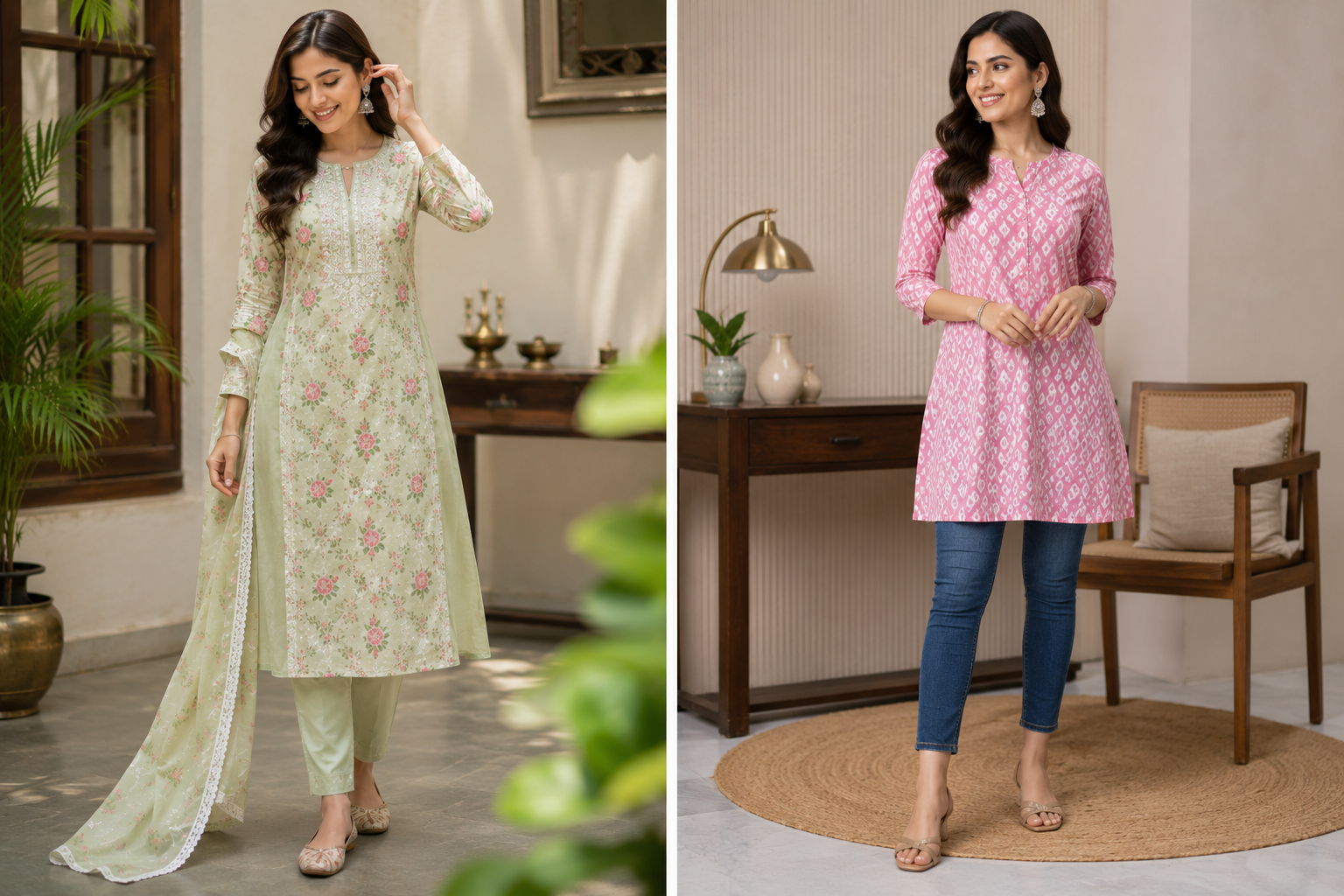
The difference between kurta and kurti is one of the most commonly searched fashion questions in Indian ethnic wear. Although both are traditional Indian garments and often look similar at first glance, they are not the same. The difference lies in their length, fit, styling, occasion suitability, and the way they are worn.
If you are shopping for ethnic wear for women, understanding the key differences between kurta and kurti can help you choose the right outfit for office wear, daily wear, festive occasions, or casual outings. In 2026, both styles continue to remain highly popular because they are comfortable, versatile, and easy to style.
This guide breaks down everything you need to know about kurta vs kurti in a simple and practical way.

1. Origin and Cultural Difference Between Kurta and Kurti
A kurta has deep roots in South Asian and Central Asian clothing traditions. It was originally designed as a loose upper garment and later became a major part of Indian ethnic fashion for both men and women. Over time, women’s kurtas evolved into elegant wardrobe staples worn for daily use, festive functions, and formal occasions.
A kurti, on the other hand, is a more modern and feminine adaptation of the kurta. It is shorter, lighter, and often designed with contemporary styling in mind. Kurtis became especially popular among women who want something stylish, easy to wear, and suitable for both traditional and western pairings.
So, when people search for difference between kurta and kurti for women, the answer is not just about appearance—it is also about how the garment evolved and how it fits into modern fashion.
2. Length and Fit
The most noticeable difference between a kurta and a kurti is the length.
A kurta is generally longer and usually falls below the knee. It creates a more graceful, flowy, and traditional appearance. Kurtas are often loosely fitted, which makes them comfortable for long wear and suitable for a wide range of body types.
A kurti is usually shorter. It may end at the hip, thigh, or just above the knee, depending on the design. Kurtis are often more fitted or semi-fitted, giving them a modern and youthful feel. This makes them ideal for women searching for stylish cotton kurti for women, office wear kurtis, or daily wear kurti sets.
If you want a relaxed and traditional look, a kurta is a strong choice. If you want something more contemporary and easy to pair with different bottoms, a kurti is usually the better option.
3. Neckline and Collar Styles
Kurta necklines are usually simple and elegant. Round neck, V-neck, and mandarin collar styles are the most common. These designs give the kurta a timeless look and make it suitable for both casual and formal wear. Many kurtas also feature embroidery, piping, or printed borders around the neckline for a refined finish.
Kurtis offer more variety in necklines because they are often designed with a modern fashion approach. You will find boat necks, square necks, keyhole necks, collar necks, and even asymmetrical necklines in kurtis. This variety makes kurtis easier to style for different looks, especially when paired with statement jewellery or modern accessories.
For women searching for latest handblock print kurta designs for women, neckline variety is one of the biggest advantages of kurtis.
4. Fabrics and Materials
Both kurtas and kurtis are available in many fabrics, but their purpose often influences the material choice.
Kurtas are commonly made from cotton, silk, linen, rayon, georgette, or chanderi. Cotton kurtas are especially popular for summer because they are breathable and comfortable. Silk or richer fabrics are often used for festive and wedding occasions.
Kurtis are also made from cotton, rayon, georgette, crepe, silk blends, and chiffon. Since kurtis are usually shorter and lighter, they are often designed in fabrics that drape well and look modern. Women searching for comfortable ethnic wear for women, cotton kurti set for women, or summer kurti for women usually prefer fabrics that are soft, breathable, and easy to maintain.
If your priority is comfort in hot weather, cotton works best for both. If you want a dressier look, silk blends and georgette are popular choices.
5. Sleeve Designs
Sleeve style is another useful way to tell a kurta and kurti apart.
Kurtas usually have more traditional sleeve options like full sleeves, three-quarter sleeves, or simple short sleeves. These designs are practical and elegant, making kurtas suitable for office wear, family functions, and festivals.
Kurtis, however, offer more experimental sleeve designs. Cap sleeves, sleeveless cuts, bell sleeves, flutter sleeves, and bishop sleeves are often seen in kurtis. These styles give kurtis a more youthful and fashionable appearance. They are especially popular among women looking for modern ethnic wear for women or trendy kurtis online.
The sleeve design you choose can completely change the look and feel of the outfit.
6. Bottom Wear Pairings
One of the biggest practical differences between a kurta and a kurti is the type of bottom wear they are paired with.
Kurtas are traditionally worn with salwars, churidars, palazzos, trousers, or straight pants. Longer kurtas also look good with leggings and dupattas. For festive wear, some women pair kurtas with skirts or ethnic trousers for a more elevated look.
Kurtis are more flexible in everyday styling. They can be worn with jeans, leggings, jeggings, palazzos, cigarette pants, skirts, or even shorts for fusion styling. This makes kurtis especially useful for women searching for daily wear kurti set, kurti with jeans style, or office wear kurti look.
If you like versatile styling, kurtis offer more mix-and-match options. If you prefer a complete traditional outfit, kurtas are often the better choice.
7. Occasion Suitability
Kurtas are ideal for occasions where you want a more traditional, elegant, or graceful look. They are commonly worn for festive events, pujas, religious ceremonies, family gatherings, office wear, and even weddings depending on the fabric and embellishment.
Kurtis are more casual and modern in appearance, though they can still be styled for formal settings. A plain cotton kurti is perfect for college, office, travel, or daily wear. A richer kurti in silk or embellished fabric can also work for small functions.
So, when people ask kurta or kurti which is better, the answer depends on the occasion. Kurta suits are better for traditional settings, while kurtis are better for everyday fashion and modern styling.
8. Fashion Trends in 2026
In 2026, both kurtas and kurtis remain strong fashion staples, but the trends are slightly different.
Kurta fashion is leaning toward:
- Hand block prints
- Straight-cut silhouettes
- Minimal embroidery
- Cotton kurta sets
- Festive yet wearable designs
Kurti fashion is leaning toward:
- Fusion cuts
- Shirt-style kurtis
- Asymmetric hemlines
- Trendy sleeve designs
- Pairing with jeans, trousers, and palazzos
Women searching for latest kurta designs for women and best kurti styles for daily wear will find that both garments continue to evolve while still staying rooted in comfort and tradition.
Final Words
The difference between kurta and kurti mainly comes down to length, fit, styling, and occasion suitability. A kurta is generally longer, looser, and more traditional, while a kurti is shorter, more fitted, and more modern. Both are beautiful, practical, and timeless additions to any woman’s wardrobe.
If you want a versatile outfit for office wear, casual outings, festive styling, or everyday comfort, understanding the key differences between kurta and kurti will help you make the right choice every time.
And if you are looking to shop elegant, comfortable, and stylish ethnic wear, Aakrati Vastram can help you purchase the best outfits for your style and occasion needs.
Share:
Boho-Chic Ethnic Attire: Cotton Anarkali & Mirror-Work Kurta Sets for Rakhi 2026
How To Style a Black Kurta Set in 8 Different Ways in 2026