Many women value the comfort and durability of their clothes. A favorite kurti can become a wardrobe staple. But, its lasting quality often hinges on the fabric type. After a few washes, the contrast between cotton and synthetic fabrics is clear.
Women often find that kurtis made from natural fibers like cotton keep their shape and softness. In contrast, synthetic kurtis may lose their appeal quickly after washing.
Key Takeaways
- Natural fibers tend to be more durable and comfortable.
- Synthetic fabrics may lose their shape and softness after a few washes.
- The choice of fabric can significantly impact the longevity of a kurti.
- Understanding fabric types can help in making informed purchasing decisions.
- Comfort and durability are key factors in choosing the right fabric.
The Fabric Dilemma: First Impressions vs Reality
New kurtis in the store catch our eye with their looks and feel. They have vibrant colors, stylish designs, and enticing fabrics. It’s hard to resist the charm of a new kurti.
The Allure of New Kurtis in the Store
When we try on a new kurti, we’re often impressed. The fabric feels soft, and the design matches our style. The best fabric for summer kurti is often a top choice. Many look for lightweight materials for comfort in the heat.
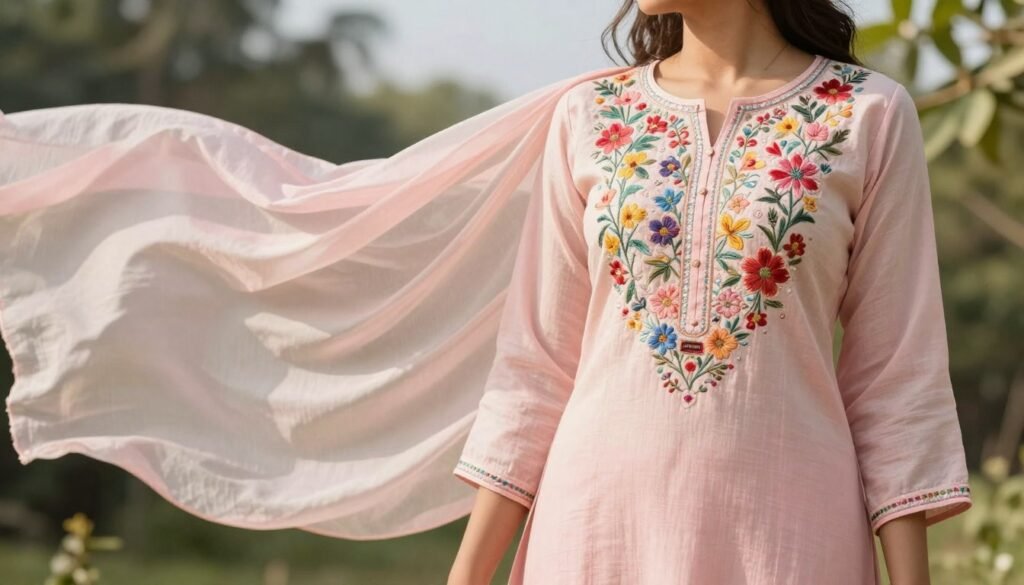
What Happens When You Bring Them Home
Once we take our new kurtis home, reality hits. The first wash can reveal surprises. Some fabrics shrink, lose color, or change texture. Knowing how fabrics react to washing is key for choosing the right summer kurti fabric.
| Fabric Type | Initial Impression | After First Wash |
|---|---|---|
| Cotton | Soft, breathable, natural | May shrink slightly, remains comfortable |
| Synthetic | Vibrant colors, stylish designs | May lose some color intensity, can feel less breathable |
By understanding these differences, we can make better choices for our wardrobe. This way, our kurtis stay comfortable and stylish over time.
Understanding Cotton vs Synthetic Kurti Fabric
It’s important to know the difference between cotton and synthetic kurti fabrics. The type of fabric affects how comfortable, durable, and stylish a kurti is.
Natural Properties of Cotton
Cotton is known for being naturally comfortable and breathable. It’s a favorite for clothes, mainly in warm weather.
Breathability and Absorption Qualities
Cotton lets air pass through, keeping skin cool and dry. It also absorbs moisture well, making it great for hot days.
Cotton’s natural fibers help with ventilation. This means less chance of getting too hot.
Types of Cotton Used in Kurtis
There are different kinds of cotton for kurtis. Egyptian cotton has extra-long fibers for softness and durability. Pima cotton is known for being soft and lasting long.
| Type of Cotton | Characteristics |
|---|---|
| Egyptian Cotton | Extra-long staple fibers, soft, durable |
| Pima Cotton | Soft, durable, less prone to pilling |
Common Synthetic Fabrics in Indian Fashion
Synthetic fabrics like polyester, rayon, and nylon are common in Indian fashion. They’re affordable and versatile.
Polyester, Rayon, and Nylon Characteristics
Polyester is durable and doesn’t wrinkle easily. Rayon feels like natural fibers and is made from bamboo or wood pulp. Nylon is strong and doesn’t wear out quickly.
Synthetic fabrics are easy to care for and come in many textures.
Initial Appeal of Synthetic Kurtis
Synthetic kurtis look good at first because of their bright colors, smooth feel, and low cost. But, they might not be as comfortable or durable over time.
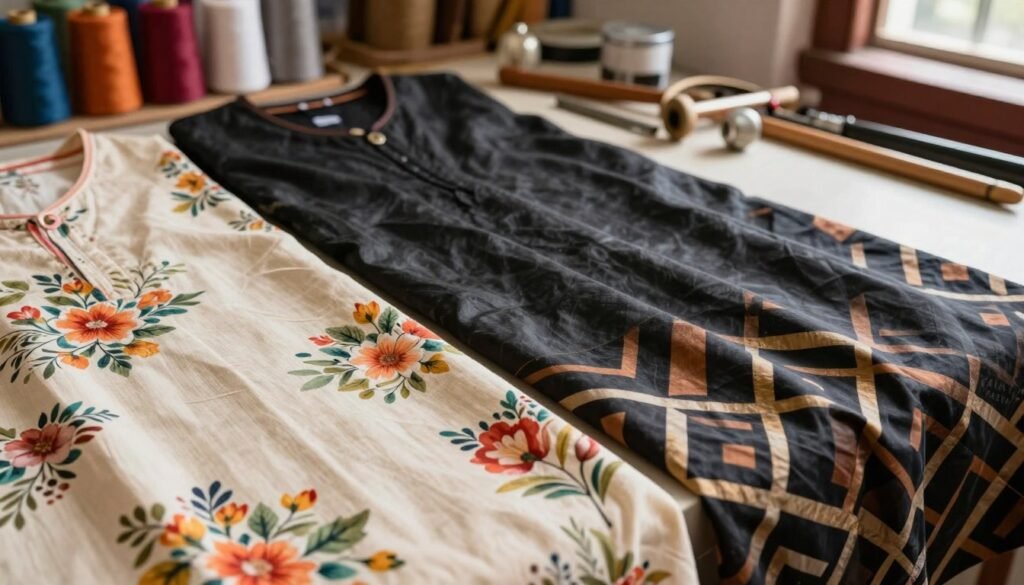
Knowing about cotton and synthetic fabrics helps people choose what’s best for them.
The Transformation After Wash #1
The first wash can change your kurti a lot. It can affect its color, texture, and shape. Knowing how fabrics react to this wash is key for picking the right clothes.
Cotton’s Initial Response to Washing
Cotton kurtis are comfy and breathable. But, the first wash can make a big difference.
Key Changes:
- Color shifting or fading
- Shrinkage or stretching
- Texture changes
Color Retention and Shrinkage Factors
Cotton can shrink or lose color in the first wash. The dye quality, wash temperature, and fabric weave matter. Pre-washing or cold washing can lessen these issues.
Texture Changes After First Wash
Cotton kurtis might feel softer after the first wash. But, they can also get rough if not pre-treated. Using fabric softener can keep the texture smooth.
How Synthetics Handle the First Wash
Synthetic fabrics like polyester and nylon are different from cotton. Their first wash reaction tells us about their durability and care needs.
Notable Effects:
- Color bleeding or fading
- Shape retention or loss
- Static cling or texture changes
Color Bleeding and Fading Issues
Synthetic fabrics might bleed color in the first wash, if the dyeing was not done right. Cold water and mild detergent can lower this risk.
Shape Retention Properties
Synthetic kurtis usually keep their shape better after washing. But, high temperatures can make them lose shape or become misshapen.
Knowing these changes helps you pick the right fabric. It ensures your kurtis stay in good shape for longer.
Changes After the Second Wash
After the first wash, the second wash brings more changes to cotton and synthetic kurtis. Knowing these changes helps you make better choices for your wardrobe.
Cotton’s Continued Evolution
Cotton kurtis get softer and more comfortable with the second wash.
Softening of Fabric and Comfort Increase
The second wash makes cotton fabric softer, feeling better against your skin. This is why many people prefer cotton kurtis for everyday wear.
Addressing Wrinkle Concerns
Cotton kurtis might wrinkle more, but you can prevent this. Washing them gently and drying them quickly helps keep them looking good.
Synthetic Fabrics: Second Wash Effects
Synthetic fabrics show different traits after the second wash. Problems like static cling and pilling can get worse.
Static and Clinging Problems
Synthetic kurtis often have static electricity, leading to cling. Using fabric softeners or dryer sheets can help.
Pilling and Thread Issues
After many washes, synthetic fabrics can pill and have loose threads. These issues can harm the kurti’s look and last.
In summary, the second wash shows the true nature of cotton and synthetic kurtis. By understanding these changes, you can choose better for your clothes.
The Third Wash Revelation
The third wash is a key test for fabrics. Cotton and synthetic fabrics reveal their true nature here. The initial softness or shine fades, showing the fabric’s real qualities.
Cotton’s True Character Emerges
Cotton kurtis reach their best comfort after three washes. The fabric softens more, losing any stiffness.
The “Lived-In” Comfort Factor
The cotton kurti becomes like a favorite, worn often. It offers a comfortable fit that’s unmatched. This comfort is a big plus of choosing cotton.
Long-term Color Behavior
Cotton keeps its color bright even after many washes. Some fading might happen, but the color stays vibrant. Your kurti looks great, even after washing it a lot.
The Synthetic Reality Sets In
Synthetic fabrics start to show their downsides after the third wash. The initial shine fades, leaving a less appealing texture.
Odor Retention Problems
Synthetic kurtis often hold onto bad smells. Even after washing, some synthetic fabrics keep unpleasant odors. This is a big minus.
Shine and Texture Degradation
Synthetic fabrics also lose their shine and texture. The fabric gets dull and less comfy against the skin. This makes it less good for everyday wear.
When picking the best fabric for your summer kurti, think about these points. Cotton stands out because of its comfort, breathability, and lasting quality.
Comfort and Breathability: Why Cotton Kurti is Better for Indian Summers
Indian summers need clothes that breathe, and cotton kurtis are the best. They are comfortable and let air in, perfect for the hot and humid weather.
Cotton’s Natural Cooling Properties
Cotton cools naturally, making it great for summer clothes. It absorbs moisture and lets air through, keeping you cool. This is super helpful in India’s hot summers.
Moisture Wicking in Humid Conditions
In humid weather, cotton pulls sweat away from your skin. It lets sweat evaporate fast, keeping you dry and comfy. Fashion experts say cotton is the best for summer because it breathes so well.
Skin-Friendly Attributes for All-Day Wear
Cotton is also good for your skin, making it perfect for wearing all day. It’s soft and gentle, preventing irritation and discomfort. This is great for people with sensitive skin who might not like synthetic fabrics.
Synthetic Fabric Problems in Hot Weather
Synthetic fabrics have big problems in hot weather. They trap heat and moisture, making you feel hot and sweaty.
Heat Trapping and Sweat Issues
Fabrics like polyester and nylon trap heat, making you feel hotter. They also don’t breathe well, making sweat issues worse. This can make you feel clammy and uncomfortable.
Skin Irritation and Rashes
Synthetic fabrics can also irritate your skin and cause rashes. They can cause friction and heat, leading to skin problems. Fashion experts say these fabrics can be harsh on the skin in summer.
In short, cotton kurtis are the best for Indian summers. They cool naturally, wick moisture, and are gentle on your skin. Synthetic fabrics, on the other hand, can make you hot, sweaty, and uncomfortable. So, cotton is the clear winner for summer kurtis.
Durability and Long Lasting Kurti Fabric Options
Knowing the difference between cotton and synthetic kurtis helps you choose wisely. Each fabric has its own strengths and weaknesses when it comes to durability.
Cotton’s Aging Process
Cotton kurtis are soft and breathable. They get even softer with each wash.
How Proper Care Extends Lifespan
Looking after your cotton kurti well can make it last longer. Regular maintenance is essential to keep the fabric in top shape.
When Cotton Kurtis Need Replacement
Even with good care, cotton kurtis will wear out. Look out for signs like fading or thinning to know when it’s time for a new one.
Synthetic Fabric Longevity Concerns
Synthetic fabrics resist wrinkles but can lose shape over time. How long they last depends on the fabric quality and care.
Common Damage Patterns
Synthetic kurtis can pill or run after many washes. Knowing these issues helps pick the right fabric.
Cost of Frequent Replacements
Replacing synthetic kurtis often can be expensive. Cotton might be a better value in the long run.
| Fabric Type | Average Lifespan | Maintenance Needs |
|---|---|---|
| Cotton | 2-3 years | Gentle washing, minimal ironing |
| Synthetic | 1-2 years | Easy care, but prone to pilling |
In conclusion, cotton and synthetic fabrics have different durability levels. Knowing these differences helps you make better choices when buying kurtis.
Blended Fabrics: The Middle Ground Option
Blended fabrics are getting more popular. They mix the good parts of cotton and synthetic materials. This mix offers a balance between cotton’s breathability and synthetic’s durability.
Cotton-Synthetic Blends and Their Performance
Cotton-synthetic blends aim to use the best of both worlds. For example, a cotton-polyester mix combines cotton’s softness with polyester’s wrinkle resistance. The blend’s performance depends on the cotton to synthetic ratio.
A higher cotton ratio means the fabric is softer and more breathable. On the other hand, more synthetic fibers make it more durable and easier to care for.
When to Choose Blended Fabric Kurtis
Blended fabric kurtis are perfect for those who want comfort, durability, and easy care. They’re ideal for summer wear because they’re breathable yet wrinkle-resistant. When picking a blended fabric kurti, think about the cotton to synthetic ratio and your lifestyle needs.
If you’re looking for the best fabric for summer kurti, choose a blend with more cotton.
Conclusion: Making the Right Fabric Choice for Your Kurti Collection
Exploring cotton and synthetic fabrics in kurtis shows their big difference. Cotton kurtis are great for comfort, durability, and satisfaction. They are perfect for Indian summers because they breathe well and cool naturally.
When picking fabrics for your kurtis, think about comfort, lasting quality, and how well they perform. Cotton kurtis win when you focus on these. They stay soft and comfy, even after many washes.
Though synthetic and blended fabrics have their perks, cotton kurtis are special. They mix style, comfort, and practicality well. Choosing cotton means you get a collection that’s both fashionable and cozy, great for any event.